AI and Human Interaction

In her Harvard course, Dr. Sahar Hashmi taught the techniques and marketing strategies that are used in the recent advanced AI  apps created by the big tech giants, over zoom as the pandemic forced worldwide travel restrictions and quarantines.

The big tech giants design product marketing strategies based on product reviews and sentiments on various products via social media. For example, an AI algorithm might suggest that if a product is viewed by customers as “loved” or  “wanted” or “liked’ then such a product will be on sale, as the next marketing move, in the online-marketing strategy space. She also touched upon how to determine if an  AI app will be a potential success or a  possible failure in the future.  “I  learned a lot as an entrepreneur about the possible vulnerabilities in the AI apps through [Dr. Sahar’s] class. It was an eye-opener for me.” – Nadine Njeim, Entrepreneur and Masters Student.

Even though the topic of AI is always focused on Tech evolution and software development, Dr. Sahar’s takeaway for MAGNiTT was on the importance of being human:

Coming up with creative interactive discussions and innovative engagement techniques for students and clients are the key components for such platforms. We should not solely rely on artificial intelligence to define our day-to-day lives and then subconsciously limit ourselves from human interactions.

“I recently completed a course taught by Dr.Sahar Hashmi, I felt the  “Harvard on campus” experience on zoom when I took her class – her regular check-ins, interactive  AI – Jamboard exercises, and AI concepts sci-fi role play made the class alive on zoom… I know for a  fact that all students enjoyed her class tremendously and looked forward to it every week.”  – Harvard graduate student, Jeffery Shen

Big tech giants and third-party vendors are now building specialized service chatbots using artificial intelligence algorithms that include ‘mental-health chatbots’ which might eventually take on the role of psychological support in the future. Similarly, the role of telemarketing agents might get replaced with virtual agents along with many other human roles in almost every field of life. Some of this we see already happening within a tech giant; ‘Amazon’, thus further explains the limitations of human-to-human interactions.

About Dr. Sahar Hashmi 
Dr. Sahar Hashmi is an MD, Ph.D., with a  Masters in Systems Design and Management (SDM) and a Ph.D. in  Healthcare Systems Management from the Business School and IDSS of Massachusetts Institute of Technology  (MIT). Dr. Sahar Hashmi is a recipient of  numerous leadership awards from MIT and the Global Technology Counsel in the USA. She taught the course as a faculty at  Harvard University, Cambridge, MA, USA.


Discussion at Harvard on technology and innovation to improve healthcare delivery in the MENA region

With the rapid advancement of technology, it is vital to integrate these transformational changes in various industries for continuous advancements and transformations. One of the fields that are likely to be enhanced by technological advancements is healthcare and hospital systems and its management around the world.

That was one of the hot topics of discussion at the annual Arab Conference at Harvard University this year during the Healthcare Technology and Innovation panel that was led by Dr. Sahar Hashmi. Dr. Sahar Hashmi is an MD, PhD in Healthcare Systems Management from MIT Sloan School of Management & IDSS with a Masters in Systems Design and Management MIT as well. She is also the CEO and Founder of her own Healthcare Consulting firm in the USA.

Over the years, healthcare startups have become more prominent in the MENA region – MAGNiTT currently lists 565 healthcare startups in the MENA region and has recorded a steady increase in the number of deals in healthcare every year since 2010, growing from 1 deal in 2010 to 23 in 2018. However, the startup ecosystem in MENA is still relatively nascent, with FinTech, E-commerce and Transport & Logistics startups accounting for most of the deals in 2018.

Dr. Sahar Hashmi reports to MAGNiTT; “one of the greatest disruptions and breakthroughs in the field of healthcare management is the use of artificial intelligence in healthcare, which will revolutionize the healthcare delivery process as we know it.” She went on to state that “the magnificent power of artificial intelligence to process the unstructured patient datasets (from monitoring devices and the IT systems) will help better predict, diagnose, treat and manage chronic disease patients for example patients with diabetes and blood pressure. There has been discussion in the scientific arena on advanced deep learning neural networks that will eventually replace certain fields of medicine such as pathology and radiology by pattern recognition robots. She also said that Big data analytics (from electronic health records and the hospital IT systems) has been predicted as the possible next game changer in the decision-making process for the healthcare stakeholders in disease management. With these evolving innovations in healthcare management, one wonders how healthcare startups can leverage these technologies to improve the regional healthcare industry.

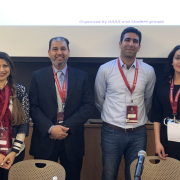
The panel discussion at Harvard was kicked off by Dr. Sahar Hashmi discussing the current state of the affairs of healthcare systems management. She stated: “When discussing challenges in healthcare systems management, three words came up immediately: access, quality and cost. These are global challenges, not limited to a specific country or part of the world. Healthcare startups, however, could play a key role in resolving these challenges by using existing and advanced technologies, thereby improving healthcare delivery to patients.” She was joined by a panel of tech-driven startup founders, who provided their insights on the impact of their healthcare technology startup on the care delivery process and three main issues of access, quality and cost.

Dr Saba Alzabin, CSO at Nabta Health, a UAE-based startup, explained how their platform has helped resolve critical women’s health concerns in the MENA region. Access to healthcare can be improved by the provision of easier access to specialist doctors and clinics, particularly in the MENA region, where there are cultural barriers surrounding certain health concerns such as fertility and/or sexual health.  Nabta app provides private and secure digital accessibility and medical solutions to women through their mobile phones. Women are able to order home kits and use smart medical devices to measure their hormone levels and other physiological parameters to monitor their health.

Nabta Health is the first to offer a platform that allows medical access and smart testing devices specifically for women needs in the MENA region.

Highlighting another challenge in the region, quality, Jalil Allabadi, CEO and managing partner at Altibbi, explained how there is no proper system of PCPs in many countries in the MENA region. Patients can individually choose what specialty they need then book appointments accordingly with their assigned providers. Patients are often overwhelmed by the medical knowledge available online and they can’t tell which online source is more ideal.

Altibbi, a Dubai-based startup that has raised $8.5M to date, provides direct and real-time phone/chat access to a GP within less than 1 minute. General Practitioners (GPs or PCPs) can normally resolve 50% of all patients concerns and conditions over the phone. Patients whose conditions cannot be addressed over a phone/chat conversation are referred to a specialist (through a full-fledged booking system).

Adding to the access and cost challenges in the MENA region, Dr. Fathi Idris Ali, Co-founder and board member of Alistishari, a recent startup, explained how their web-based platform allows specific region-based patients to connect to an international audience of medical professionals.

Nowadays, many patients around the globe travel abroad to seek medical care and second opinions – a common phenomenon in the MENA countries. Alistishari aims to match patients with a large panel of highly-trained medical professionals from around the world, who volunteer their time and expertise to provide advice and second opinion on medical conditions. Dr. Ali emphasized that his simple technology can help improve access and save cost at the same time.

Dr Sahar Hashmi states to MAGNiTT: “the immediate challenge is how to integrate these innovative advanced technologies into the healthcare and hospital systems in the most efficient manner and with the alignment of all healthcare stakeholders in the system. As we all know that each hospital management system is unique and different even within the same hospital networks and the existence of enormous variations in the hospital systems is an unavoidable reality.”

There is an increasing need for experts and consultants who can tackle such mammoth healthcare systems to transform and integrate the advanced and innovative technologies. There is no set standard way to tackle the issue of technology integration into hospital systems. It can be done efficiently only if you have the combination of certain skills and expertise, for example, design skills to redesign the care delivery processes, hospital operations management, familiarity and knowledge of the advanced technologies using artificial intelligence and machine learning, skills to measure the outcomes and assess the impact of these advanced technologies. It is inevitable that these fast-paced innovative technologies will transform and disrupt the entire healthcare ecosystems in the near future.” Dr. Sahar Hashmi’s own consulting firm, based in the US, specializes in providing such combination of specific expertise to hospitals and healthcare systems.

So, how much of an impact will the advanced robotic technologies have on the MENA region, or in other words, will robot healthcare providers replace human providers in the future? The question was posed to the panelists for discussion.

Dr. Saba Alzabin predicted that there will always be a hybrid system where both robots and human providers will work together, whereas Jalil Allabadi predicted that robot providers may resolve the ‘shortage of providers’ problem in the system. Dr. Ali, on the other hand, believed that robot providers can never completely replace human providers and he doesn’t believe that this is going to happen anytime soon.

All three speakers, however, agreed that healthcare startups may disrupt the future of healthcare delivery system around the world. The role of regional healthcare startups in that disruption seems promising but yet to be determined.

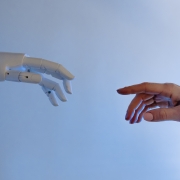
Rising woman leader in the world of artificial intelligence and digital transformation

Please give us a bit of background about you and your business?

Myriad Consulting LLC is a female led boutique consultancy firm backed by an extensive network of highly educated, skilled, and renowned advisors and sub-contractors from both industry and academia globally. I am the founder and serving as the CEO of Myriad Consulting LLC. I started with the mission to provide an advising strategic platform to VCs, startups, futurists alike to enable them to transform their visions into a palpable reality regardless of many factors that sets brilliant ideas back. As such, we started off by taking on many consulting projects for free. I value passion, potential and the genuine goal to enrich and improve the lives of the population at large and that has been my go-to metric since. Furthermore, we at Myriad Consulting value humanness, and use a very customized hands-on interactive approach and what I believe sets us apart from the many consulting firms that currently exist. We slowly developed into a boutique consulting firm with a team of brilliant minds of various expertise — MDs, PhDs, MD-MBAs, & MBAs from Harvard and MIT who believe in Myriad’s mission to give back to the community through an innovative and transformative approach.

How is this business unique?

Myriad is unique in many ways — we can quickly assemble a team based on any given project’s need/requirements by pooling the best from my vast network of MDs, PhDs and Industry consultants (former Google, IBM, Oracle, Microsoft, McKinsey, BCG, Bain consultants, world renowned physician specialists for example, endocrinologists, psychologist/psychiatrists, hospitalists, scientists and professors, all from Ivy leagues) from around the world to provide top quality services. One of the other unique features of my firm is that we provide /offer our client a complete package from design, to strategy, to implementation plan, to partnership development to completely transforming the vision into a reality for our client — all at a competitive cost without compromising our standards and high-quality performance.

What advice do you have for startups?

As business scientist leaders in the world of AI, we all agree on one thing: meta-data or big data or practically speaking any type of ‘data’ that is collected and used to build an AI application is the key to its success or the cause of its failure. The data needs to be of quality and relevance. A common saying amongst AI data experts: “rubbish in leads to rubbish out” We are also aware of the possibility of harmful consequences of meta data if it is misused. I strongly encourage and advise all my clients including VCs/developers/startups to include data bias prevention techniques as part of the design process of any technology/device/app development. This will save them a lot of time and money in the long run.

What are some of your accomplishments?

I am an MD with a PhD from MIT’s School of Business Management and IDSS. I also did my masters’ in System Design and Management from MIT where I applied the systems design approach in the hospitals operation management setting. I am grateful to have been recognized through numerous leadership awards from MIT and the Global Counsel of Technology in the United States. To mention a few, I received the Larry G. Benedict Institute Leadership Award, Graduate Women in Excellence Award, the Sloan Business School’s Graduate Teaching and Mentoring the executive MBAs (e-MBAs) Apple Award (one of the most prestigious MIT awards), MIT’s Bridge Builder Award, which honors civic leaders who have formed partnerships across racial, social, economic, and geographic barriers, for the betterment of their communities, and the Best Innovative Project Award from Global Community of Technology (USA). I recently designed and taught a unique AI course for graduate students at Harvard on Artificial Intelligence, technology innovation and digital transformation in the business world. I really enjoyed incorporating creative online teaching techniques such as using jam board exercises and learning about each of my students’ unique journey through regular check-ins, which added for a more interactive and engaging sessions. The hard work paid off as my students expressed how much they learned from my course and how they felt an “on campus” Harvard University experience over zoom. This happened when Harvard went completely remote like most universities in the world due to the COVID19 pandemic. My course and students ‘experience was published in an entrepreneurial magazine recently. Link add: https://magnitt.com/news/ai-and-human-interaction-52901 Whenever I am asked by my students about my next course that I plan to design and teach so that they can pre-enroll in my class, or whenever I hear how my students applied what I taught them in my class to their businesses/journey and the positive impact it had on them, it brings a smile on my face and gives me joy that I am able to give back and pass on to my students what my professors gave me: a pathway to grow and harness using the knowledge tools necessary. Similarly, whenever I hear from clients and see how their businesses have excelled and boomed from Myriad Consulting’s expertise and the positive impact patients or population at large experience as a result, it is truly humbling.

Do you believe in luck? Has it played a role in your career success?

I believe in hard work along with passion, patience and perseverance — I also believe the excerpt from the book ‘outliers’ by Malcolm Gladwell; “the tallest oak in the forest is the tallest not just because it grew from the hardiest acorn; it is the tallest also because no other trees blocked its sunlight, the soil around it was deep and rich, no rabbit chewed through its bark as a sapling, and no lumberjack cut it down before it matured. We all know that successful people come from hardy seeds. But do we know enough about the sunlight that warmed them, the soil in which they put down the roots, and the rabbits and lumberjacks they were lucky enough to avoid?” The same holds true for a leader / visionary as well. I believe that I am lucky and blessed to have been surrounded by such a strong and sincere support network from my male and female colleagues, friends and family members in my journey as a female leader in healthcare.

What are your hobbies/what do you do when you are not working?

I love and appreciate the arts and I am a big fan of the Museum of Fine Arts (MFA). Much of my inspiration from art is transformed into my painting such as mosaic and marble art painting. You can find me horse riding during my favorite season of autumn in Boston where the fall foliage makes the horse-riding experience almost magical and enchanting. I am a shameless techie-nerd and love indulging in a good AI, leadership, tech & business, business & healthcare type book on a cold snow day with a warm cup of chai.

How many times has someone told you: You can’t do something? How did you deal with it?

I come from a family of highly accomplished siblings, lawyer and doctorates, from Harvard and MIT, who happen to be all female, and from a minority (Southeast Asian/India Pakistan) heritage. We faced our fair share of criticism on focusing on our education from many, even today, but I give full credit to my parents, God bless them, who went above and beyond to enable and encourage us to continue to dream big, despite all the societal, cultural, and familial pressure they received from both ends. Our parents told us that everyone faces hardships in their lives but it’s how individuals deal and view those challenges that sets them apart from others. They taught us to forge ahead even when matters became challenging in our lives while growing up as young girls working hard to seek knowledge. As much as it’s a challenge to be a woman leader entrepreneur in a newly established field of AI and digital transformation, I find inspiration from female leaders such as the late Justice Ruth Bader Ginsburg (RBG) and her inspirational story of being a strong woman leader in a male dominating field. I still have a long way to go, and I am forever grateful to all those who were there for me during my humble beginnings and continue to support me to grow. I believe I have been very blessed in that I found support from the most unexpected people/places in my life. My goal is to have a positive impact on patient lives and save millions of patient lives at once and through innovative AI platforms this vision can be a reality one day

Dr. Sahar Hashmi: Modernizing Healthcare through Applications of Artificial Intelligence and Digital Transformation

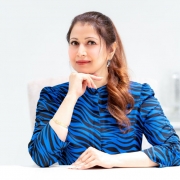
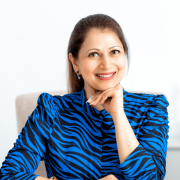
A charismatic leader, a mentor to many, and a passionate entrepreneur — she excels in all these categories. Meet Dr. Sahar Hashmi—a perfect exemplar of an ardent business leader who encourages digital transformation by assisting aspiring businesses and start-ups in healthcare, through her consultancy firm. Even her educational journey has proved to be an inspiration to many. She is an MD with a Ph.D. from MIT’s School of Business Management and IDSS and also completed her master’s in System Design and Management from MIT where she applied the systems design approach in the hospital’s operation management setting. Dr. Sahar recently designed, developed and taught a unique and creative AI course for graduate students at Harvard University on Artificial Intelligence, Technology Innovation, and Digital Transformation in the Business World. It was during the time of the COVID19 pandemic and her course gained popularity amongst the Harvard graduate students and they felt an “on-campus” experience with Dr. Sahar over zoom.
Dr. Sahar has remarkably implemented her vast knowledge in establishing a consultancy firm that provides a ‘myriad’ of consulting services and thus named her company Myriad Consulting LLC. It is a female-led boutique consultancy firm backed by an extensive network of highly educated, skilled, and renowned advisors and sub-contractors from both industry and academia globally. She is serving as the founder and the CEO of the firm which is based in Boston, Massachusetts, USA.
Dr. Sahar firmly believes in the three (p)s—passion, patience, and perseverance. She emphasizes an excerpt from the book ‘Outliers’ by Malcolm Gladwell, that has inspired her life journey. It says— ‘tallest oak in the forest is the tallest not just because it grew from the hardiest acorn; it is the tallest also because no other trees blocked its sunlight, the soil around it was deep and rich, no rabbit chewed through its bark as a sapling, and no lumberjack cut it down before it matured.’ By referring to a tree as a leader she attempts to draw attention to the secondary factors that play a critical role in an individual’s ability to grow and develop their skills to sustain in the business world. Every aspiring businessperson must appreciate those who inspire them to be their best and have a positive impact on their journey. She considers herself fortunate to have a spectacular and supportive network of male and female academics and industry leaders. She says, “I still have a long way to go and I am forever grateful to all those who were there for me during my humble beginnings and continue to support me to grow.”


“We all face challenges and hardships but turning the negatives around you into positives is a skill on its own and that can be learned and will go far with you in life.”


Transforming vision into reality

Dr. Sahar founded Myriad Consulting with the mission to provide consulting services for strategic and design platforms for VCs, start-ups, futurists alike. The aim is to enable them to transform their visions into a palpable reality, despite the many obstacles that prevent brilliant ideas from manifesting in real-time. As she values passion, potential, and the genuine goal to enrich, Dr. Sahar tries to improve the lives of the population at large and that has been her go-to metric since. “We slowly developed into a boutique consulting firm with a team of brilliant minds of various expertise — MDs, PhDs, MD-MBAs, & MBAs from Harvard and MIT who believe in Myrid’s mission to give back to the community through an innovative and transformative approach,” she highlights. This core team helps clients to channelize their potential with their ideas to create a sustainable strategy to grow in the market. “I truly value humanness, empathy at work place and use a very customized hands-on interactive approach which sets the company apart from various present consulting firms,” she continues. For the past few years, she has felt truly ecstatic and blessed, as Myriad Consulting has consistently received good standing from the State of Massachusetts, USA, and has garnered a reputation of trust and outstanding work among many disruptors. “Many of my friends, colleagues from MIT and Harvard are not surprised at Myriad’s success, who has always referred to me as the ‘Queen of Innovation, AI and Digital Transformation’,” says Dr. Sahar.
She describes Myriad as a one-of-a-kind business in many ways: based on any project’s requirements, she robustly assembles a team by pooling the creme de la crème from her vast network of MDs, PhDs, and Industry consultants from around the world to provide top quality services. Similarly, the firm’s unrivalled offerings are one of its distinguishing characteristics. It offers clientele a complete package consisting of design, strategy, implementation plan, to partnership development to completely transform the vision into a reality for its client — all at a competitive cost without compromising its standards and high-quality performance.
Myriad’s true wealth lies in the vast knowledge and skill set pool of its virtuous and highly talented team. “Clients benefit from an experience of having some of the world’s most brilliant minds from the most prestigious institutions including but not limited to Harvard, MIT, etc. sitting together (virtually) to help bring their vision to life,” she mentions. Its consulting services are vast and suitable for many different entities including but not limited to firms and institutions (hospitals/clinics) looking to automate their services (newbies in digital transformation), data analytics of health records using AI and machine learning techniques, biotech, and healthcare device/app. It also offers due diligence to VCs for start-up investments, (saving them millions of dollars in the long run), VCs looking to build an innovative mental health platform, chronic disease smart virtual centers in their region, customized educational consulting for executives looking to upgrade their current position with customized guidance on the selection of courses from the existing Harvard and MIT online courses/programs.


Against all odds

“The biggest challenge in my business is being a female CEO leader in fields of AI and digital transformation,” says Dr. Sahar. It is difficult and at times daunting to be a minority within a minority (a woman leader in AI and digitaltech world) — yet she has always been exceedingly passionate about her work. As the census of female leaders in Dr. Sahar’s field is substantially less, it becomes harder, for her, to present her expertise to entice her male clientele. She has witnessed the presence of illogical common sub-conscious bias which runs in both academic and industrial spheres to consider men as more efficient and better at jobs than women. Her experience of being surrounded by supportive and genteel men who encourage women, on the other hand, contradicts such discrimination, she explains. She does not, however, deny the lack of equal opportunities for women to grow in their fields. To combat this, she advises her female colleagues to work in an organization that allows them to grow as female leaders regardless of their race, ethnicity, gender, or background.

“There will always be bad apples in an organization that will not support a female leader to move forward and will find ways to stop her or make her life miserable or make her feel that she is not good enough,” she emphasizes. She thinks choosing wisely is the key. She continues, “We all face challenges and hardships but turning the negatives around you into positives is a skill on its own and that can be learned and will go far with you in life.” She also suggests enjoying life to its fullest by focusing and living in the present moment and “muting” the nay-sayers.


Dream big

As a doctor, Dr. Sahar has always dreamt of saving millions of lives at once and realized, through innovative applications of Artificial Intelligence and adequate business management, she could make that dream a reality. She envisions developing an innovative AI applications platform in-partner with a big tech giant or a VC investment, that will disrupt the way to deliver patient care globally.
The real-time example of the evolution of AI are platforms such as ‘Metaverse, OpenAI, DeepMind (e.g. AlphaFold)’ that holds the potential to revolutionize many fields, altogether. “I look forward to exploring the meta-world in the near future,” she mentions. However, she also shows concerns about the use of Meta-data as it could also have a potential negative impact, it should therefore be used in the most ethical and secure way possible to avoid any unintended consequences.
Dr. Sahar even recommends VC clients and start-ups to dream big, and stay positive regarding the prospects of diversification that such technology can bring to the future of work. Moreover, she is a strong believer in diversity and inclusion both in the business and the data science worlds. Thus, she encourages developers/start-ups to include data bias prevention techniques as part of the design process of any technology/device/app development. She also wants her clients to think through the process of data access and collection even before the design process of any innovative technology development process. This will help them to seek a better approach in securing data whilst blueprinting a reliable business model driving themselves to be cyber-secure.
Being a woman leader in the digitaltech world, Dr. Sahar hopes to continue inspiring many more people in the future to start their AI-powered businesses and help her clients and students reach new heights.


“I still have a long way to go and I am forever grateful to all those who were there for me during my humble beginnings and continue to support me to grow.”